Human eyes detect only a small band of light, roughly from 400 to 700 nanometers. A robot can carry sensors that read infrared, ultraviolet, heat, distance, or light levels far below what people notice, then turn that data into an image.
The result may look like a normal photo, but it can answer a different question: where is the heat, what material is present, or how far away is each surface?
Quick read
- Thermal cameras show heat patterns rather than visible color.
- Ultraviolet and multispectral sensors can separate materials that look alike.
- LiDAR builds depth maps by measuring reflected laser light.
Light outside human vision
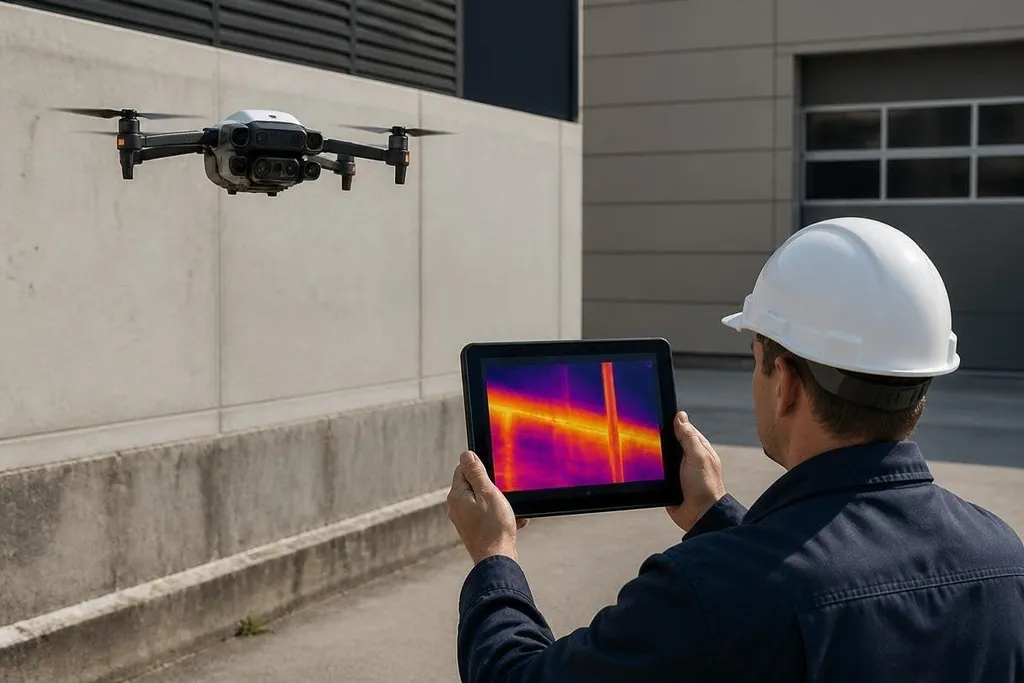
A standard camera records visible light. An infrared camera reads longer wavelengths, which can reveal warm motors, overheated wiring, or people in low light. The sensor doesn't see heat in the same way a hand does; it measures infrared radiation and maps those readings to colors or gray levels.
Ultraviolet sensors work on the other side of the visible range. They can show marks, coatings, or surface changes that disappear under ordinary light. The value depends on the task and the sensor's filter, since a UV image isn't a direct picture of what a person would see.
During an inspection of a crop, road, or painted part, a multispectral camera can compare how a surface reflects each selected band. That can help separate two objects with similar visible colors when their material response differs outside the visible range.
The image is data first and a picture second. A technician still needs to know which band the camera recorded and what conditions may have changed the reading.
Seeing heat, depth, and motion
Thermal imaging adds temperature patterns to a robot's view. It can help an inspection robot find a hot bearing before a failure, but a shiny metal surface can reflect nearby heat and confuse the reading. The robot needs a clear view and a sensible way to check the result.
LiDAR, short for light detection and ranging, measures the return time of laser pulses. Those measurements let the system build a depth map, so a cable, wall, or person appears as a set of measured distances rather than colored pixels.
The extra depth data helps autonomous systems plan movement. A camera may show a dark gap, while LiDAR can show whether the gap is 5 cm deep or 50 cm deep.
Glass, rain, dust, and dark surfaces can change the return signal, so LiDAR still has limits.
High-speed cameras record motion in far shorter time steps than ordinary video. They can reveal vibration in a machine or the shape of a fast-moving object during a test. The camera must trade exposure time, light, storage, and image detail, so a faster recording mode may produce a noisier image.
A frozen frame can reveal a failure point while hiding the sensor setup, control method, and test result. Robot24.com coverage can connect those images to the machines and tasks behind them, so the next step is to ask what the frame leaves out.
Why the image still needs context
A sensor reading is never the whole scene. Infrared shows radiation, not a perfect temperature reading. UV can expose a mark without explaining its cause. LiDAR measures reflected light, not every surface equally well.
The robot also needs software to label or compare the data. That software may flag a hot spot, match a depth map to a known room, or mark a surface with an unusual spectral response. A person then checks whether the result fits the job and the sensor conditions.
I think the useful test is simple: does the extra image change a decision that visible video cannot support?
That question keeps the system tied to a real task. A thermal camera has a clear role in heat inspection. A depth sensor earns its place when distance changes how the robot moves. An extra camera with no defined decision path adds files, setup work, and review time.
A practical sensor check
Before choosing a camera package, check these points:
- Target signal: Decide whether the robot needs heat, material response, depth, motion, or visible detail.
- Wavelength range: Confirm the sensor records the band that contains the feature you need.
- Site conditions: Check dust, rain, glass, shiny metal, darkness, and changing light.
- Ground truth: Plan a known reference object or measurement for checking the image.
- Action after detection: State what the robot or technician does when the system finds a change.
This last point connects the sensor to the job. If the robot spots a hot motor, someone needs a set response. If it finds a change in a crop or coating, the team needs a way to inspect that result before acting on it.
The next useful step is not adding more cameras. It is testing one unseen signal against a known result, then measuring whether that extra information improves the decision.